

Top 8 Sprinklr alternatives
Sprinklr competitors at a glance
| Tool | Best for | Key features | Pricing |
|---|---|---|---|
 Jotform AI Agents |
Instant customer responses and AI-powered workflows |
AI agents for chat, phone, voice, SMS, WhatsApp, Instagram, Gmail, and Salesforce; 7,000-plus customizable agent templates; workflow automation; knowledge-base training; human escalation |
Free Starter plan; Bronze, Silver, and Gold from $34; Enterprise custom |
 Sprout Social |
Social media management |
AI-assisted replies; centralized inbox; sentiment analysis; reporting; social listening |
Essentials from $79/seat/month, then $199, $299, and $399 plans; Enterprise custom; 30-day trial |
 Zendesk |
AI-powered customer service |
AI agents; ticketing; omnichannel routing; chat, telephony, and knowledge base; AI reporting and automation |
Support Team from $19/agent/month, Suite Team $55, Suite Professional $115; Enterprise + Copilot custom |
 Hootsuite |
Social media scheduling, customer care, and insights |
AI content creation; social inbox; message routing; listening; reporting; approval workflows |
Standard from $99/user/month, Professional $199, Advanced $399; Enterprise custom; 14-day trial |
 Klaviyo |
B2C marketing and customer engagement |
Email, SMS, RCS, WhatsApp, and mobile marketing; AI tools; automation; Customer Agent; Helpdesk; analytics |
Free for up to 250 profiles and 500 emails/month; paid plans scale by profiles and usage |
 Zoho Social |
Social media publishing and collaboration |
Zia AI; monitoring; centralized inbox; bulk scheduling; approvals; reporting; Zoho CRM and Desk integrations |
Free plan plus Standard, Professional, Premium, Agency, and Agency Plus; from $10; 15-day trial |
 HubSpot |
CRM-based customer engagement across teams |
Smart CRM; marketing, sales, and service tools; AI content tools; data automation; social media management |
Free tools; Starter from $20/seat/month; Professional and Enterprise vary by hub |
 Twilio |
Flexible, developer-led customer engagement |
Voice, SMS, WhatsApp, email, video, customer data, conversation AI, and Flex contact center |
Pay as you go; SMS from $0.0083/message and Voice from $0.0085/minute |
Sprinklr is an AI-powered Unified-CXM platform for customer-facing teams, including customer service, social, marketing, and insights teams. It offers 33 products across four product suites, with enterprise tools for contact centers, social media management, customer feedback, analytics, and AI-powered service.
- Sprinklr Service
- Sprinklr Social
- Sprinklr Insights
- Sprinklr Marketing
Sprinklr Service includes capabilities such as omnichannel contact center tools, AI agents, agent copilot, conversational IVR, workforce management, quality management, and customer self-service. Sprinklr Social supports publishing and engagement, distributed social marketing, and employee advocacy, while Sprinklr Insights includes social listening, competitive benchmarking, product and location insights, surveys, LLM insights, and video intelligence. Sprinklr Marketing covers content and campaign planning, social advertising, unified analytics, and ad comment moderation.
Sprinklr’s wide-ranging feature set can make it a strong option for large organizations, but it may be more complex or expensive than smaller teams need. Discover eight of the best Sprinklr competitors your company could benefit more from, whether you’re looking for more affordable pricing, better functionality, or a wider range of integrations.
Pro Tip
Streamline your customer support by integrating Jotform Gmail Agent with your existing workflows. By automating email responses, your team can focus on more complex tasks, ensuring faster and more consistent communication with customers without losing the personal connection.
What to look for when evaluating Sprinklr competitors
When browsing Sprinklr alternatives, consider what you really need the tool to do. Think about the following factors:
- Customer experience, social media management, or both: Sprinklr is a Unified-CXM platform that combines customer service, social media management, marketing, and customer intelligence. Some alternatives focus only on social media management or customer support, while others cover multiple customer-facing functions. Consider whether you need a specialized tool or a broader platform.
- AI capabilities that match your use case: AI is now common across customer engagement software, but capabilities vary widely. Look beyond whether a tool “has AI” and consider what it can actually do, such as answer customer questions, summarize conversations, assist agents, analyze sentiment, or automate routine workflows. Nearly 90 percent of organizations now report regularly using AI in at least one business function.
- Omnichannel customer engagement: Consider where your customers want to contact you, such as social media, SMS, email, phone, live chat, and your website. Choose a platform that can bring relevant conversations and customer context together, while supporting smooth handoffs when an issue needs a human agent.
- Automation and workflow management: Your team can only handle so many customer engagements at a time. Look for tools that can route conversations, automate repetitive follow-ups, trigger notifications, and connect with your existing systems. For example, a customer asking about an order should be able to receive a timely update without creating unnecessary manual work for your team.
- Performance insights and analytics: Look for reporting that helps you understand customer interactions across channels, not just overall engagement. Depending on your needs, this may include response and resolution times, conversation volume, sentiment, agent performance, campaign results, and customer feedback trends.
- Pricing and scalability: Sprinklr is designed for enterprise organizations and uses quote-based pricing. If you’re a small or midsize business, consider whether an alternative offers a plan that fits your current budget and can scale as your customer-engagement needs grow.
- Customization, integrations, and governance: Customer-facing processes vary by organization. Choose a platform that lets you tailor workflows, integrate with the tools your team already uses, and apply the permissions, security, and approval controls your organization requires.
- Ease of use: Any solution you choose should be easy for the people who will use it every day, including agents, marketers, managers, and administrators. Consider the learning curve, setup requirements, and how easily your team can adopt the platform.
The 8 best Sprinklr competitors
1. Jotform AI Agents
Looking to wow your customers with an experience like no other? Jotform AI Agents offers AI-powered customer engagement across multiple channels, such as chatbot, phone, voice, SMS, WhatsApp, and more. It comes with an extensive library of customer engagement and customer service AI agents, such as for customer support and live chat.
Developer: Jotform
Best for: Instant customer responses and AI-powered workflows
Key features: AI agents across multiple channels; 7,000-plus customizable agent templates; knowledge-base training; form completion and data collection; workflow automation; appointment scheduling; and human escalation
Pros: Both newbies and experts appreciate the intuitive interface
Cons: The free plan has a limit of five AI agents, which may not be enough for some organizations; for best performance it should be integrated with existing customer experience tools
Plans/pricing: Jotform AI Agents has a free plan as well as three paid plans starting at $34 per month, plus a custom enterprise-level plan
2. Sprout Social

Sprout Social is a social media management platform for teams that need to publish content, engage with audiences, monitor conversations, and measure performance from one place. Its current platform combines publishing, engagement, analytics, social listening, employee advocacy, and AI-assisted workflows.
Developer: Sprout Social
Best for: Social media management
Key features: Centralized social inbox; AI-assisted replies and content creation; sentiment analysis; cross-network reporting; social listening; review management; and help desk integrations on higher plans
Pros: It gives teams a centralized workspace for managing multiple social profiles, messages, and reporting
Cons: It is primarily a social media platform, not a full contact-center solution for channels such as phone, email, or SMS. Advanced listening and analytics may also require add-ons
Plans/pricing: Sprout Social offers Essentials from $79 per seat per month billed annually, Standard from $199, Professional from $299, Advanced from $399, and custom Enterprise pricing. A 30-day free trial is available
3. Zendesk

Zendesk is an AI-powered customer service platform that brings ticketing, messaging, live chat, help-center content, phone support, and automation into one system. Its current offering centers on AI agents that can resolve customer requests, alongside tools that help support teams route, manage, and analyze conversations.
Developer: Zendesk
Best for: AI-powered customer service
Key features: AI agents; ticketing; messaging and live chat; omnichannel and skills-based routing; telephony and IVR; knowledge base; Action Builder workflow automation; AI-powered reporting; and agent and admin AI assistance
Pros: It offers a mature support stack for teams that need to manage customer requests across multiple channels and automate common resolutions
Cons: Advanced workflows, integrations, and enterprise governance can require careful setup. Total costs can also increase with agent seats, AI resolutions, usage-based features, and add-ons
Plans/pricing: Zendesk offers Support Team from $19 per agent per month billed annually, Suite Team from $55, Suite Professional from $115, and a quote-based Enterprise + Copilot plan. Contact-center, workforce engagement, and some AI capabilities may carry additional costs.
4. Hootsuite

Hootsuite is a social media management platform for planning content, engaging with audiences, monitoring conversations, and reporting on social performance. Its Social OS now includes AI assistance through Wisdom, along with tools for publishing, social customer care, listening, analytics, and employee advocacy.
Developer: Hootsuite
Best for: Social media scheduling, customer care, and insights
Key features: AI-assisted post and image generation; unified social inbox; automated message replies and routing; social listening; customizable reports; content approvals; team collaboration; and advanced governance for Enterprise customers
Pros: It is well suited to teams that want to coordinate publishing, social customer care, and reporting across multiple accounts from one workspace
Cons: Hootsuite focuses on social channels, so businesses that need a full customer-service solution for email, SMS, or phone will likely need additional tools
Plans/pricing: Hootsuite offers Standard from $99 per user per month, Professional from $199, Advanced from $399, and custom Enterprise pricing. A 14-day free trial is available.
5. Klaviyo

Klaviyo is a B2C CRM platform that helps businesses use customer data to personalize marketing, service, and analytics. While email and SMS remain core channels, Klaviyo now also supports RCS, WhatsApp marketing, mobile app marketing, AI tools, customer service features, and customer data capabilities.
Developer: Klaviyo
Best for: B2C marketing and customer engagement
Key features: Email, SMS, RCS, WhatsApp, and mobile app marketing; segmentation; marketing automation; AI-powered content and analysis tools; Customer Agent; Customer Hub; Helpdesk; customer data tools; and analytics
Pros: It gives B2C and ecommerce businesses detailed customer data and automation tools for creating personalized campaigns across several marketing channels
Cons: Klaviyo is most suitable for B2C businesses. It is not a dedicated social media publishing platform, and costs can rise as active profile counts, message volume, and product usage grow.
Plans/pricing: Klaviyo has a free plan for up to 250 active profiles and 500 email sends per month, including $5 in monthly mobile-message credits. Paid pricing varies by active profiles, messaging volume, and the products your business uses
6. Zoho Social

Zoho Social is one of the leading social media management and customer experience platforms, helping organizations engage their target audience on social media. It includes Zia AI tools for drafting content and replies, a centralized inbox, reporting, and integrations with Zoho CRM and Zoho Desk.
Developer: Zoho
Best for: Social media publishing and collaboration
Key features: Zia AI content and reply assistance; multi-channel publishing; bulk scheduling; social monitoring; centralized inbox; content approvals; custom reports; and Zoho CRM and Zoho Desk integrations
Pros: It offers a wide range of social publishing and collaboration tools, particularly for teams already using other Zoho products
Cons: It is designed mainly for social and business-messaging channels, not as a full omnichannel contact-center platform for email and phone support. Advanced capabilities vary by plan
Plans/pricing: Zoho Social offers a free plan, Standard, Professional, Premium, Agency, and Agency Plus plans. Pricing varies by region and billing cycle, and a 15-day free trial is available
7. HubSpot
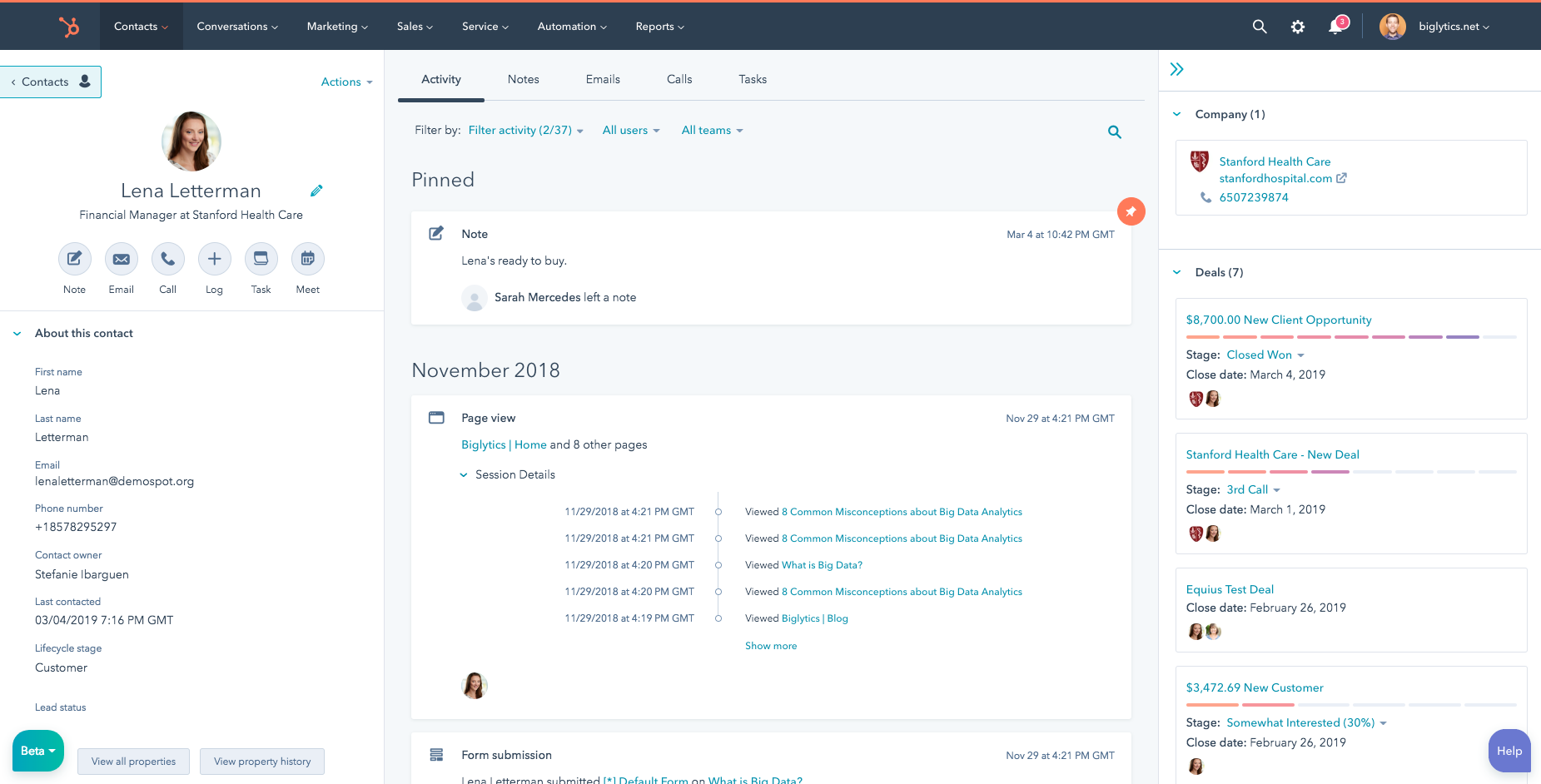
HubSpot is a customer platform that combines CRM, marketing, sales, service, content, operations, and commerce tools. Its social media management capabilities sit within Marketing Hub, while Service Hub, Sales Hub, and the Smart CRM help teams connect customer data and interactions across functions.
Developer: HubSpot
Best for: CRM-based customer engagement across teams
Key features: Smart CRM; marketing automation; lead management and prospecting; Service Hub tools for customer support; omnichannel messaging; AI-powered content tools; data-quality automation; and social media management through Marketing Hub
Pros: It provides a connected system for teams that want to manage customer data, marketing, sales, and service activity from one CRM-based platform
Cons: Costs can increase as teams add hubs, seats, contacts, and advanced features. Social media management is part of Marketing Hub rather than a standalone product
Plans/pricing: HubSpot offers free tools, while Starter plans begin at $20 per seat per month. Professional and Enterprise pricing varies by hub.
8. Twilio

Twilio is a flexible customer-engagement platform for organizations that want to build communications into their own products and workflows. Its current platform connects messaging, voice, email, customer data, and AI, with tools for building voice AI, managing conversations across channels, and creating contact-center experiences.
Developer: Twilio
Best for: Flexible, developer-led customer engagement
Key features: Programmable voice, messaging, email, and video; Voice API; SMS, WhatsApp, and RCS; Conversation Memory; Conversation Orchestrator; Conversation Intelligence; Conversation Relay; customer data tools; and Twilio Flex contact center
Pros: Its APIs and configurable products give technical teams substantial flexibility to build tailored communication and customer-engagement experiences
Cons: Twilio is less turnkey than many customer-service platforms and typically requires development resources to implement and maintain. It also does not provide a dedicated social media management suite
Plans/pricing: Twilio uses pay-as-you-go pricing. U.S. SMS starts at $0.0083 per message, WhatsApp Business at $0.005 per message, and Voice at $0.0085 per inbound minute or $0.014 per outbound minute. Flex costs $1 per active-user hour or $150 per named user per month
Which Sprinklr competitor will you choose?
Sprinklr has a lot to offer organizations that want to create memorable customer experiences across channels. However, if Sprinklr doesn’t have the right feature set, level of complexity, or budget fit for your needs, you’re in luck. The Sprinklr competitors on this list are great alternatives.
If you’re having trouble deciding which option to choose, start by considering your pain points with customer engagement and find a platform that helps make your day-to-day life easier.
For example, if you need a flexible platform for building voice, messaging, or contact-center experiences, then Twilio may be the best platform for you. If you need a way to better manage all your organization’s social media accounts, Sprout Social or Zoho Social may do the trick. For those who need a CRM-based platform that connects marketing, sales, and service teams, HubSpot may be a good option.
Similarly, if you’re finding it difficult to respond to customers instantly across channels, Jotform AI Agents is a great choice. Choose an AI agent template that fits your use case, customize it with your business information, and use it to provide timely responses at scale. And the best part? You can get started, completely free, today.


Send Comment: