

Modèles de flux de travail pour les demandes de prêt

Modèle de pré-approbation de prêt automobile
Pré-approuvez efficacement les prêts automobiles pour vos clients grâce au modèle de processus de pré-approbation de prêt automobile en ligne gratuit de Jotform ! Chaque demande que vous recevez via votre formulaire de demande de pré-approbation de prêt automobile sera immédiatement transmise à votre conseiller en prêt, qui décidera de l'approuver ou de la rejeter. Une fois leur décision prise, le client recevra un e-mail d'accusé de réception l'informant de votre décision. Personnalisez ce modèle de processus de pré-approbation de prêt automobile en fonction de vos besoins grâce à notre éditeur par glisser-déposer. Ajoutez davantage de valideurs et de branches conditionnelles, configurez des notifications et des délais, et personnalisez vos e-mails d'accusé de réception en quelques clics. Chaque valideur peut répondre aux tâches depuis sa boîte de réception, et en tant que propriétaire du formulaire, vous pouvez gérer l'ensemble du flux d'approbation du modèle de processus de pré-approbation de prêt automobile sur n'importe quel appareil.
Accéder à la catégorie :Demande de prêt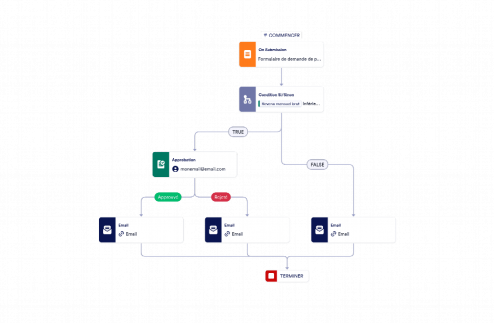
Modèle d'approbation de prêt personnel
Approuvez ou refusez les demandes de prêt personnel avec un modèle de processus d'approbation de prêt personnel en ligne gratuit ! Lorsqu'un demandeur remplit votre formulaire de demande de prêt, sa demande sera automatiquement transmise ou approuvée en fonction de ses revenus mensuels. S'il est transmis, il ira au directeur financier qui prendra une décision finale à ce sujet - déclenchant un e-mail de répondeur automatique informant le demandeur de votre décision. Apportez des modifications à ce modèle de processus d'approbation de prêt personnel en faisant glisser et en déposant des éléments pour ajouter des approbateurs, configurer des notifications et des conditions, personnaliser les e-mails, etc. Chaque approbateur pourra répondre aux tâches depuis sa boîte de réception, et en tant que propriétaire du formulaire, vous pouvez afficher et gérer votre flux d'approbation sur n'importe quel appareil. Soyez plus efficace avec un modèle de processus d'approbation de prêt personnel automatisé pour votre institution financière.
Accéder à la catégorie :Demande de prêt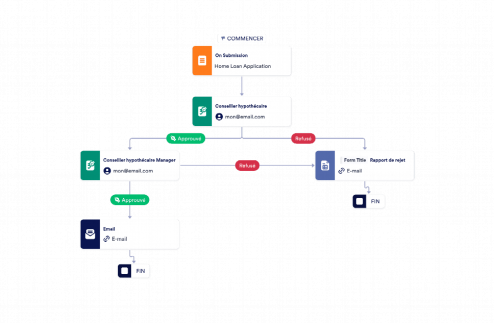
Modèle d'approbation de prêt immobilier
Rationalisez les approbations de prêt immobilier avec notre modèle gratuit d'approbation de prêt immobilier. Les banques et autres prêteurs peuvent utiliser ce modèle automatisé pour collecter les demandes de prêt immobilier et les envoyer à des conseillers en prêts hypothécaires pour examen. Une fois que sa demande aura terminé le processus d'approbation, le demandeur recevra un e-mail de confirmation ou de rejet automatisé. N'hésitez pas à personnaliser ce modèle de processus d'approbation de prêt immobilier pour mieux répondre à vos besoins. Sans codage, vous pouvez affecter de nouveaux approbateurs via des adresses e-mail, ajouter plus d'étapes au flux d'approbation, créer et fusionner des branches conditionnelles et réviser le contenu de l'e-mail fourni. En tant que propriétaire du formulaire, vous pourrez suivre l'ensemble du processus d'approbation à partir de la boîte de réception Jotform, en vous assurant qu'aucune demande ne passe entre les mailles du filet. Faites des demandes de prêt immobilier à la fois transparentes et indolore avec un modèle d'approbation de prêt immobilier personnalisé et automatisé pour votre banque ou société de prêt hypothécaire.
Accéder à la catégorie :Demande de prêt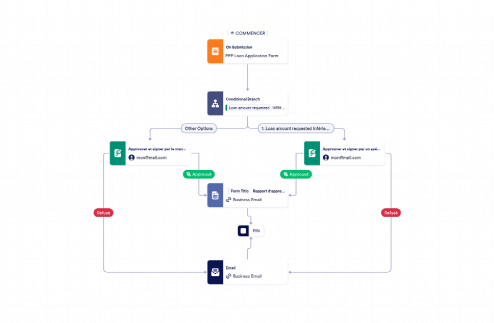
Modèle d'approbation de prêt PPP
Assurez-vous que les entreprises obtiennent le soutien dont elles ont besoin pour traverser la pandémie à l'aide d'un modèle d'approbation de prêt du programme de protection des chèques de paie (PPP) en ligne ! Lorsqu'un propriétaire d'entreprise remplit votre formulaire de demande de prêt PPP, sa demande sera envoyée à un spécialiste ou à un gestionnaire de clôture en fonction du montant du prêt demandé. Cette personne choisira alors d'approuver ou de refuser la demande, déclenchant un e-mail automatisé informant l'entreprise de votre décision. Apportez autant de modifications que vous le souhaitez à ce modèle de processus d'approbation de prêt PPP avec notre générateur de glisser-déposer. Ajoutez plus d'approbateurs, configurez des notifications et des branchements conditionnels, personnalisez les e-mails, définissez des délais de réponse, etc. Chaque application peut être répondue directement depuis Jotform Inbox en un seul clic ! Rationalisez la façon dont vous traitez les prêts PPP pour aider les entreprises à obtenir leurs fonds plus rapidement avec un modèle d'approbation de prêt PPP en ligne gratuit de JotForm.
Accéder à la catégorie :Demande de prêtÀ propos des modèles de flux de travail Demande de prêt
Les modèles de demande de prêt sont des séquences conçues pour rationaliser le processus de demande de prêt en automatisant et en optimisant chaque étape, de la soumission à l'approbation. Ces modèles sont utilisés dans divers scénarios, tels que le traitement de prêts personnels, les demandes de crédit, permettant ainsi aux établissements financiers de gérer efficacement des volumes élevés de demandes. L'automatisation rend les délais plus courts et réduit le risque d'erreur. Essentiel pour maintenir la satisfaction des clients et l'efficacité opérationnelle.
Jotform Workflows stands out as the premier online workflow builder for Loan Application Workflow Templates, offering a no-code, drag-and-drop interface that simplifies the customization of workflows. Users can automate key actions such as approvals, task assignments, and notifications, allowing for seamless and efficient operations. With features like centralized progress tracking and data management through Jotform Inbox and Jotform Tables, organizations can maintain a clear overview of each application's status, enhancing transparency and accountability throughout the process.
Why Use Loan Application Workflow Templates?
- Loan Application Workflow Templates enhance accuracy by reducing human error through automation, thus ensuring that all necessary data is collected and processed correctly. This level of precision contributes to more secure and reliable decision-making in the loan approval process.
- Speed is significantly improved as these workflow templates automate routine tasks and notifications, allowing applications to move swiftly from one step to the next. This efficiency is vital in the competitive financial industry, where faster service can lead to higher customer satisfaction and retention.
- Process consistency is maintained through standardized workflows, ensuring that each loan application follows the same steps and criteria. This uniformity helps in minimizing discrepancies and ensures that all applicants are treated fairly and equitably.
- Accountability is reinforced by clearly defining roles and responsibilities within each workflow. With task assignments and automated approval tracking, every participant in the process knows their duties, which reduces confusion and improves accountability.
- Professional data handling is ensured as these templates allow for secure data collection, storage, and management. By integrating with third-party services, Jotform Workflows maintains data integrity and compliance with industry standards, offering peace of mind to both financial institutions and their clients.
Common Problems Solved by Loan Application Workflow Templates
- Manual follow-ups are often a pain point in loan processing, leading to delays and inefficiencies. Loan Application Workflow Templates automate notifications and reminders, ensuring timely follow-ups and reducing the need for manual intervention.
- Disconnected processes can result in lost information and missed steps, but these workflow templates integrate all necessary components into a single cohesive process, enhancing communication and reducing the risk of errors.
- Approval delays are minimized by automating the routing of applications to the necessary approvers, ensuring that decisions are made promptly. This automation accelerates the approval cycle, providing faster responses to applicants.
- Unclear responsibilities often lead to bottlenecks in application processing. By assigning specific tasks and approvals to designated team members, these templates clarify roles and responsibilities, leading to smoother and more efficient operations.
- Limited process visibility can hinder management's ability to oversee application progress. Jotform Workflows' centralized tracking features provide real-time updates on every application, enabling managers to identify bottlenecks and optimize workflow performance.
Des fonctionnalités adaptées à de nombreux cas d’utilisation
- For streamlined application processing, the Drag-and-Drop Workflow Builder allows users to customize and visualize every step, ensuring that each task follows a logical order and maintains efficiency throughout the loan application process.
- Conditional Logic is used to route applications based on specific criteria such as loan type or applicant credit score, ensuring that each application receives the appropriate level of scrutiny and decision-making.
- Automated Approvals facilitate faster processing by automatically sending applications to the relevant approvers based on predefined rules, reducing delays and enhancing efficiency in decision-making.
- Task Assignments ensure that each step of the loan application process is handled by the right team member, enhancing accountability and ensuring that no detail is overlooked.
- Payment Requests can be integrated into the workflow to handle application fees or other financial transactions, streamlining the payment process and ensuring prompt collection.
- Electronic Signature Requests allow applicants to sign necessary documents digitally, speeding up the process and reducing the need for physical paperwork, which enhances operational efficiency.
- Third-Party Integrations with services such as Google Drive and Slack enable seamless data sharing and collaboration, ensuring that all stakeholders have access to the necessary information when they need it.
How to Create a Loan Application Workflow Templates
- Browse the Template List for a Loan Application Workflow Templates workflow template or start with a blank workflow.
- Customize the workflow steps, assignments, conditions, and actions using the Drag-and-Drop Workflow Builder.
- Activate the workflow, connect it to the appropriate starting form, and monitor its progress through Jotform Inbox or Jotform Tables.
Top Use Cases for Loan Application Workflow Templates
- For Managers: Loan Application Workflow Templates provide managers with a comprehensive overview of the entire application process, allowing them to monitor progress, identify bottlenecks, and allocate resources more effectively. By centralizing data in Jotform Tables, managers can easily access and analyze information, facilitating better decision-making and strategic planning.
- For Teams: Teams benefit from these templates through clear task assignments and automated notifications, which reduce confusion and ensure that everyone knows their responsibilities. This clarity helps in maintaining high levels of productivity and collaboration, as team members can focus on their specific roles without unnecessary disruptions.
- For Customers: Customers experience faster processing times and improved communication, as these templates automate routine tasks and provide timely updates. This efficiency leads to higher levels of satisfaction, as applicants receive quicker responses and have greater confidence in the institutional handling of their loan applications.
Summarizing Loan Application Workflow Templates
Loan Application Workflow Templates offer a robust solution for managing the complexities of loan processing, ensuring that each application is handled with precision and efficiency. By automating key aspects of the workflow, these templates reduce the administrative burden on staff while enhancing speed and accuracy. Jotform Workflows provides an intuitive platform for customizing and deploying these templates, empowering organizations to streamline their operations and improve customer satisfaction. With centralized data management and real-time tracking, businesses can maintain transparency and accountability, driving better outcomes for both the institution and its clients.
FAQ
1) Que sont les modèles de flux de travail de demande de prêt ?
Les modèles de flux de travail de demande de prêt sont des outils d'automatisation prédéfinis conçus pour rationaliser le processus de demande de prêt, y compris la collecte des données des demandeurs, la vérification des documents, les flux d'approbation et la communication avec les demandeurs. Ces modèles aident les institutions financières et les prêteurs à gérer l'ensemble du processus plus efficacement.
2) Comment les modèles de flux de travail de demande de prêt peuvent-ils profiter aux prêteurs et aux institutions financières ?
Les modèles de flux de travail de demande de prêt automatisent les tâches répétitives telles que la collecte des informations sur le demandeur, la révision des documents et la gestion des processus d'approbation. Cela réduit les efforts manuels, accélère le processus d'approbation du prêt et garantit une expérience plus fluide pour les prêteurs et les demandeurs.
3) Quels processus de demande de prêt peuvent être automatisés à l’aide de modèles de flux de travail ?
Les modèles de flux de travail de demande de prêt peuvent automatiser des processus tels que la soumission initiale de la demande, la vérification des documents, les approbations de vérification de crédit, les affectations des agents de crédit et les mises à jour de statut. Cela permet de gagner en efficacité lorsque l'on gère plusieurs demandes de prêt à la fois.
4) Comment les modèles de flux de travail de demande de prêt s'intègrent-ils aux autres outils utilisés par les prêteurs ?
Les modèles de flux de travail de demande de prêt peuvent s'intégrer à des applications tierces telles que Google Drive, Dropbox et OneDrive pour le stockage et la gestion des documents, Slack et Microsoft Teams pour la communication d'équipe et QuickBooks pour automatiser les dossiers financiers et le suivi des paiements.
5) Les modèles de flux de travail de demande de prêt sont-ils personnalisables pour différents types de prêts ?
Oui, les modèles de flux de travail de demande de prêt sont entièrement personnalisables pour s'adapter à différents types de prêts, notamment les prêts personnels, les prêts hypothécaires, les prêts automobiles et les prêts aux entreprises. Les prêteurs peuvent modifier les modèles pour les aligner sur des critères de demande spécifiques, des réglementations de conformité et des processus d'approbation.
6) Comment les modèles de flux de travail de demande de prêt peuvent-ils améliorer la communication avec les demandeurs ?
Les modèles de flux de travail de demande de prêt peuvent envoyer automatiquement des notifications et des mises à jour aux demandeurs via des intégrations avec des outils tels que Slack, Microsoft Teams ou des services de messagerie tels que Mailchimp et ActiveCampaign. Cela garantit que les demandeurs sont tenus informés de l'avancement de leur demande de prêt à chaque étape du processus.
7) Comment les modèles de flux de travail de demande de prêt aident-ils à la gestion documentaire ?
Les modèles de flux de travail de demande de prêt rationalisent la gestion des documents en collectant et en vérifiant automatiquement les documents des demandeurs. Les intégrations avec Google Drive, Dropbox et OneDrive permettent aux agents de crédit de stocker en toute sécurité les documents et d'y accéder facilement tout au long du processus de demande.
8) Les modèles de flux de travail de demande de prêt peuvent-ils contribuer aux flux d'approbation ?
Oui, les modèles de flux de travail de demande de prêt automatisent le processus d'approbation en acheminant les demandes vers les responsables de crédit ou les décideurs appropriés. Les notifications d'approbation et les rappels peuvent être envoyés via des outils tels que Slack ou Microsoft Teams, accélérant ainsi le processus de décision.
9) Quels sont les avantages de l’utilisation de modèles de flux de travail de demande de prêt pour le suivi financier ?
Les modèles de flux de travail de demande de prêt peuvent s'intégrer à QuickBooks pour automatiser le suivi financier, garantissant ainsi que les prêts approuvés, les remboursements et les dossiers financiers sont enregistrés avec précision. Cela réduit le risque d'erreurs manuelles et simplifie la gestion financière pour les prêteurs.
10) Comment les modèles de flux de travail de demande de prêt garantissent-ils le respect des exigences réglementaires ?
Les modèles de flux de travail de demande de prêt permettent de garantir la conformité en automatisant les étapes nécessaires telles que la vérification des documents, la collecte du consentement du demandeur et les vérifications de solvabilité. Ils créent également des pistes d'audit, ce qui permet aux prêteurs de suivre plus facilement chaque action du processus d'approbation du prêt et de respecter les normes réglementaires.